





































Post by: MikeH
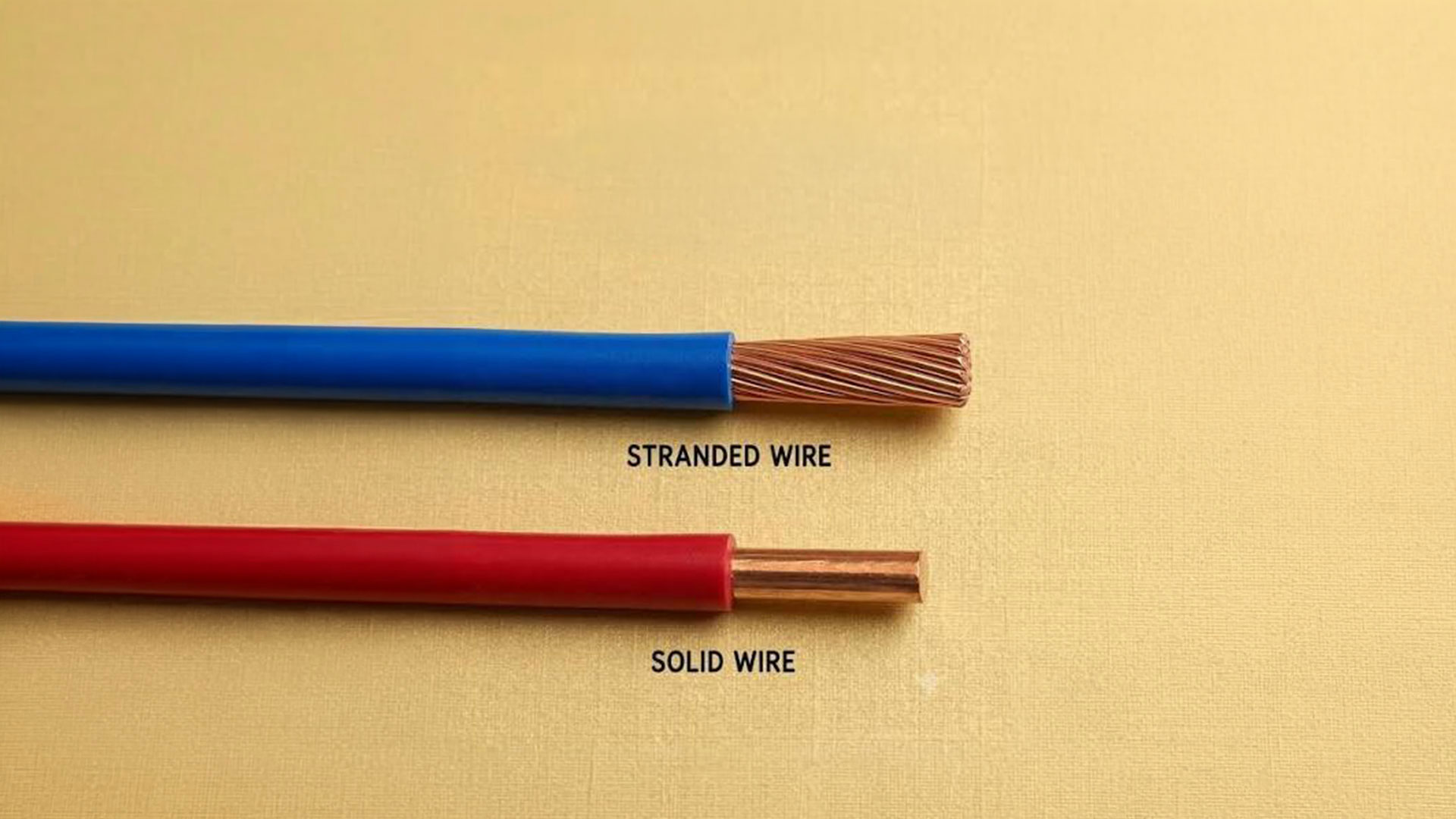
In another post on this Forum, it states that stranded wire is not required but is preferable for wiring a bus conversion. I have always thought that solid wire would be better. For the same gauge wire, the wires are thinner because resistance drops in a single wire vs. a stranded wire. Granted, solid wire is probably also stiffer, but if given the choice, I would opt for the less-resistant wire. Because it has less flexibility, there would also be a lower chance of the wire kinking. Also, it is much harder to break a thicker wire than several thin ones wrapped together. Is my thinking wrong on this? What are the rules, either written (i.e., code) or unwritten, on wire selection?





Post by: robertglines1
Let the experts determine! The biggest thing to keep in mind is to properly anchor whichever one you use and protect it from sharp edges (i.e. using rubber bushing going through holes drilled for passage through metal from one area to another). Movement and rubbing are the enemy with either.
Post by: rv_safetyman
The big controversy is the “CODE”. Others will discuss that. But my understanding is that the approved code is the same NEC or NFPA code as your house (thin ice here). There is a specific NFPA code for RVs (1192?)
There are a few diverse thoughts on the subject. I think everyone agrees that THHN is acceptable and meets code (when installed properly). THHN comes in both solid and stranded.
As for current-carrying capability, that is a matter of sizing the wire appropriately. As I understand the theory, stranded wire carries a bit more current, but not significantly more.
Then the issue of wire fatigue comes up. Stranded wire is probably better in that respect, but many RVs have solid wire and have for many decades. Properly installed, fatigue should not be a problem.
Next is the issue of securing (terminating) the wire to things like outlets and lights. The typical outlet is designed for use with solid wire. Lots of discussion that stranded wire is more difficult to get a good connection (that lasts). I used stranded wire and then secured it with crimped connectors.
Then the real discussion starts when folks start discussing using marine cable. This cable is approved by the Coast Guard, but does not meet the applicable code for houses or RVs. Not because it is inferior, just because the manufacturers have not spent the funds to seek approval.
OK, that all sounds like I know what I am talking about. Not the case. I have mixed my thoughts with what I recall from previous threads. I am posting it here to get the issues mentioned and then let the folks who really know clean up my mess.
Post by: kyle4501
Are you building it like a house, or like a vehicle? Most houses use solid wire. ALL cars use stranded wire. Stranded wire is easier to work with in some installations, whereas solid wire is easier in others. I’m hoping to run all my wiring in conduit to increase protection against damage.
My bus has four skylights that will leak sooner or later, so I’m probably going to use stranded marine wire with the proper end terminals.
Post by: luvrbus
I used marine stranded; some say it is not approved, but it was my bus, and I used it; it has never been a problem. Millions of RVs on the road with Romex solid wiring for the AC side in no conduit doesn’t mean it is right, but that’s the way the manufacturers do it.
Post by: 47FLXclipper
Having training in both electronics and commercial electrical, I use solid [“single core”] for AC according to building electrical codes (proper terminations and strain relief) and stranded for DC (the more strands the greater the flexibility) – tinning the exposed copper ends of stranded wires will reduce connection problems from oxidation, and always better to solder connectors (preferably copper) than just crimp them – any wiring, in dedicated wireways or not, needs proper mechanical protection against penetration or abrasion – pretty much common sense.
Post by: bevans6
I use stranded wire for DC low-voltage circuits and Romex for 120 VAC circuits. All termination components are designed for solid wire, and with proper support, there is no realistic risk of vibration. Plus, it meets code and insurance requirements, and all RIVA units are made that way.
Post by: kyle4501
I’m too lazy to look for it, but I have read a very well-presented explanation of why soldering connections is a bad thing – the solder wicks back up the wire & makes it stiff; then it sees more flexing at the end of the solder and leads to fatigue failures. The article explained that the proper crimp will cold-fuse the connector to the wire, preventing that problem.
Seems there are pros & cons no matter which way you go.
Of all the wiring jobs I have seen, it is the installer, not the materials, that makes the difference between a good (safe) or a bad (fire hazard) install.










Whatever your wire choice is, if you:
1. Use the correct wire size for the circuit breaker
2. Use proper end connections for the wire & devices used
3. Use the correct wire insulation type for the environment
4. Use the correct supports
Post by: bevans6
The guys who build the wiring harnesses for high-buck race cars – the Grand-Am prototypes, the Le Mans LMP cars, the Indy cars – use crimped connectors exclusively. These days, harnesses are high-frequency data buses, with some low-voltage stuff like lights and motors. Crimped gold-plated connectors, no solder in sight. It’s been years since I researched the physics of it, but I recall something like gas-tight joints and micro-cold-welding to prevent corrosion, and so on. Proper strain relief is important.
Regardless, if you do a good job of any technique, it will probably be fine. At the end of the day, it’s a bus, not a space rocket.
Post by: Kenny
If I remember correctly, my MC-9 uses tin-covered stranded wire in the original wiring.
Post by: boogiethecat
Use stranded wire if you can. The finer, the better.
Post by: jjrbus
Most talk about “the code” and “the book.” Has anyone actually had their bus inspected? How do you get an RV electrical inspection? Nobody is going to pass or fail you at your job, so you can do anything you want. Right?
The one sure way to get an inspection is to have an electrical fire that injures someone, or to try to file a claim for it. The insurance company or plaintiffs will be happy to provide the finest inspectors in the country to give your bus a thorough inspection to make sure it was done by the book!
Post by: JackConrad
More important than what kind of wire you use is how well it is secured to prevent movement and/or vibration and how good the connections are at the terminations. If a wire has to flex every time a door is opened, it should definitely be stranded.
Post by: rampeyboy
Somewhere in a bus conversion tips type site, I read that someone recommended using heavy extension cords for the coach wiring. They based this on cost, but I’m also sure it’s because it is heavy enough for a 120 VAC load and flexible.
Post by: rv_safetyman
Boyce, there have been “strong” discussions about extension cords. The overwhelming consensus among the folks I consider “practical experts” is that they should NOT be used for 120VAC applications. First, much of that type of wire is really cheap, both in the wire and in the insulation. Second, the application is based on “open air” use. That allows the wire to dissipate heat better. If you bury it in a wall with no exposure to the open air, it can (possibly) heat up. Not sure it would cause a problem, but why risk it? Wire designed to be enclosed is pretty darn cheap.
Folks have advocated using an extension cord for low-current 12V/24V wiring. Recall here that low-voltage applications can have some pretty high amperage, and that wire gauge sizing is quite important (i.e., you would not want to use an extension cord for something like a headlight circuit.
Post by: artvonne
Hobe is the guy who advocated using extension cords. As long as you use an adequate gauge of wire for the load, as specified in wiring charts, there should be no problems. Also, there is no law keeping you from using heavier-gauge wire on any given circuit: 12 gauge in place of 14 gauge, 10 gauge in place of 12 gauge, etc.
I remain impressed by the electrical systems in the old GMC Buses we scrapped; they were very comparable in quality to aviation standards. Quality end connectors with nut and bolt connections, well-routed and securely attached wire clusters and conduits, and heavy-gauge, well-insulated wiring. The old 3751s and 4104s still plying the highways are a testament to the care and quality that went into those systems.
There is no reason the AC side of an RV couldn’t be built as well, without it costing any more than a residential-grade system. All AC outlets have screw connectors; there is no reason they can’t be used with good end connectors on multistrand wire.
Post by: Hi yo silver
I have to respectfully disagree with the use of extension cords for permanent installation. The real concern here is the aging of the insulation, rather than the adequacy of the wire size. If you refer to the appropriate section of NAPA 70, the National Electrical Code, you will find the details.
As an experienced fire investigator, I can tell you these standards were developed over many years through investigating fires that caused property loss and sometimes loss of life. Now, I’m a laid-back kind of guy who believes that many rules can be bent, but this isn’t an area where you can take shortcuts. The insulation on extension cords will become brittle as it ages and fall from the conductors, leaving them bare. I have personally seen the old cords and even seen the results.
On another note, the best set of battery jumper cables I have is made up of fine-stranded welding cable. When standard jumper cables won’t do the job, these cables will let you crank like a new battery! If you look at the cheapest cables you can buy, they are made up of a few relatively large copper strands. The best-quality cables might be of equivalent size but are made of fine-stranded cable. The current travels along the outer surface of the wire. The cable made of finer strands provides more surface for conducting the current.
Post by: Hi yo silver
Oh yeah, one more thing while I’m on my soapbox. Throw away the RVIA book. That’s the standard that Fleetwood and other RV builders follow when slapping together those flimsy trailers, like the new Fleetwood I used to have, which could have burned to the ground on two occasions had it not been for Lady Luck. Those are minimum standards, sometimes followed with the absolute cheapest components installed. In my qualified opinion, Romex is not designed or intended for use in RVs or boats where terminals are subjected to constant vibration, whether “sufficiently anchored” or not.
Further evidence of the need for stranded wire is found on railroad diesel locomotives. You won’t find solid wire anywhere on one. It’s strictly stranded conductors.
Post by: rv_safetyman
Gary, read through this thread again, and you will see that stranded wire has to be terminated properly. Open up an outlet and make sure they used crimp-on fittings. If not, I would put a load on each outlet and then check the temperature in the box.
Post by: artvonne
I know what you’re saying about poor insulation that falls off the conductor; I have seen this myself. But I would argue it has nothing to do with extension cords per se and more to do with overall wire quality. The wire on the spools at the auto parts stores isn’t always any better than the stuff inside the cheapo Chinese extension cords sold at Home Depot. You need the stuff that stays flexible below zero.
Post by: Barn Owl
I am not going to take sides on this one because there is what I wish I had and what I have. I’m not about to rewire my bus, so I am using what the previous owner put in back in 1979. Stranded for DC, Romex for AC. Thirty-two years later, and I haven’t had an issue yet. I will post again as soon as my bus burns to the ground, if I live to see it.
I don’t have much flex in my bus, so I am fairly confident the wiring will be fine for a long, long time. This is not a black-and-white, right-or-wrong thing for me. I look at wiring choices as Good, Better, or Best. Good will work and is what I have; better is wonderful if you can, but there are many examples of Good doing just fine, and that doesn’t necessarily make it bad, just not the best. Don’t lose any sleep over this one, guys.
Post by: MikeH
One thing that seems to be common in many answers is that we need to be careful of the quality of the wire. So the next question is: how can you tell which wire and insulation are good quality? Before I started this thread, I most assuredly would have opted for solid wire, but now I think I would go with stranded. But if I walk into one of the big-box stores and start looking at spools of wire, how can you tell whether it is quality? No sense opting for the “better” type of wire only to be foiled because the insulation peels off in a couple of years. That is clearly not “better”.
Any clues on this? Do you look for a specific manufacturing stamp, or do you ask the salesman what coating is used?
Post by: Melbo
THWN is for outside and inside use — I didn’t look up what is necessary in an RV, just normal code — THWN is available like THHN in stranded or solid — Last time I needed some, they had it at Lowe’s or an electrical supply house.
Post by: kyle4501
From Wikipedia :
THWN stands for “Thermoplastic High Water-resistant Nylon-coated.
THHN stands for “Thermoplastic High Heat-resistant Nylon-coated.
Both are gas & oil resistant. I don’t believe NM Romex is. Then again, if I’ve got oil & gas inside my coach, I probably have bigger problems than what wire I used.
Post by: babell2
In my conversion, I will be using all Stranded. I am used to the Aviation industry, and NO aircraft ever uses a solid conductor in any application. I believe it is a vibration thing. All large wiring is not only crimped but also soldered afterward for a better connection.
Post by: Nick Badame Refrig/ACC
Disallowed Uses of Extension Cords
The following uses of extension cords are not permitted at the NHMFL:
• Extension cords may not be used in place of permanent facility wiring. Cords shall not be attached to building surfaces or structural members. They shall not be permanently concealed in walls, ceilings, or under floors – including raised computer floors.
• Do not run cords through moisture, tied to overhead pipes, across traveled roads, under carpets, or across areas of high foot traffic.
• Extension cords may not be run through doors, ceilings, windows, holes in walls, or through hinged door openings in enclosures. This is to prevent “pinch” damage to the cord. If it is absolutely necessary to run an extension cord through a doorway or open window for short-term use, the cord must be protected from damage if the door or window slams shut; it must be removed immediately when no longer in use; and it must not be a trip hazard.
• Do not use extension cords that are frayed, cut, or damaged such that inner conductors show, or that have outer sheaths which have pulled loose from their molded plugs exposing the inner conductors. In particular, do not use a cord that has a bare conductor exposed.
• Detachable multi-tap adapters may not be used on extension cords nor on receptacles.
• Cords may not be repaired with electrical tape, nor may tape be used for other purposes on a cord. It may conceal damage.
Cord overload and overheating:
In addition to the total electrical load, the conditions of use affect extension cord safety. Rated capacity for an extension cord assumes it will be used in an open-air and straight configuration.
As electric current passes through a wire, electrical resistance causes some voltage drop and heating of the wire. Coiling or winding excess cord length can concentrate this heat and overheat the cord. Similarly, covering a cord with a rug or rag can trap heat and overheat the cord. This trapped heat can damage the cord and lead to a fire. Tying a knot in a cord can have a similar outcome.
BUT WAIT… THERE’S MORE!!!
Click on the link below to read additional comments that may have been added after we published this article. There may be many more comments with even more information that may be useful to you and your bus.
Forum content extracted by Phil Lyons, our Chief Forum Moderator. To read the rest of this discussion in the Forum, click this link:
Discussions like this take place on a daily basis in the RV Conversions Online Discussion Forum.
To read them go to:
https://www.rvconversions.com/forum/index.php
Anyone can read the discussion board, but to get the most out of the Forum you need to join by clicking the “register” link above the login box in the upper left section of the Forum page.
Registration is free and once registered you will be able to view all the available discussion boards, view images, lookup and contact other members, reply to other members, share your own experiences for others to learn from, and most importantly, post your own questions.